Why do AI pilot projects so often fail to deliver real results, what drives the economics of implementation, and how can data be protected as AI agents gain more and more autonomy? Pavel Zingan discussed these questions with Alexandru Savinov, director of DAAC digital.
Pavel Zingan: Alexandru, artificial intelligence is on the agenda of almost every organization today. In your view, how ready are businesses and the state for it in reality?
Alexandru Savinov: I would compare the current situation to the early 2000s. Back then, every office already had computers, but there was little real automation. Organizations bought hardware, installed accounting software, connected to the internet and email, yet documents still lived on paper. Reports were compiled manually from several spreadsheets, and approvals went through signatures and couriers. Then, within a few years, everything changed. Every employee had to be able to work in corporate systems, and an organization without them lost out to competitors. Electronic document management, internet banking and the first e-government services appeared.
The same is happening with AI now. Almost everyone knows how to use chatbots, and they help many people in their work. But asking a neural network a question today is roughly the same as typing a text in an editor twenty years ago. It is the basics, not a change in how work gets done. The effect comes when AI is built into the organization’s processes, works with its data and follows its rules.
Pavel Zingan: What stands in the way?
Alexandru Savinov: In our experience, the problem is almost never the model itself. Today’s models are very powerful. The difficulties begin where the model meets the real organization. The task is often defined starting from the technology rather than the business. Data is scattered across many systems, of varying quality and with different access rights. And there is no integration: if AI lives separately from the accounting system, CRM or document management, it remains just a demo. That is why many pilot projects never reach production.
Pavel Zingan: At the same time, AI technologies have become much more complex over the past two years. What has changed for organizations?
Alexandru Savinov: A lot has changed. Until recently, AI in a company usually meant a chatbot or a separate model for a single task, such as credit risk assessment. Today everything works differently.
Models have appeared that can reason. They break a complex task into steps, analyze large volumes of documents and check their own intermediate conclusions. In addition, a model now answers not only with what it was trained on, but also draws on the organization’s knowledge bases. To make this possible, company documents are indexed in advance, and the model finds what it needs in them at the moment of the request. This way it works with up-to-date internal information. But a question immediately arises: which documents is it allowed to show to which employee.
And most importantly, AI agents have appeared. They do not just answer, they act: they access other systems, create and change records, send messages and launch processes. New standards are emerging for connecting agents to corporate systems, such as the MCP protocol. Agents can work together: one collects data, a second analyzes it, a third prepares a decision. On top of that, models now understand text, images, voice and scanned documents equally well.
Pavel Zingan: That sounds like a completely different level of complexity for implementation.
Alexandru Savinov: It is. Today, implementing AI means running a full-scale system integration project. You have to decide which models to use and where to host them, how to connect them to data sources, how to separate access rights and how to monitor the quality of answers. Models need to be checked regularly: their behavior changes when versions are updated and when data changes. This requires business analysis, data work, architecture, development and cybersecurity all at once. That is why a separate profession is emerging on the market, the AI Integrator.
Pavel Zingan: Let’s move on to economics. Executives often ask how much implementation will cost and when it will pay off.
Alexandru Savinov: This question should be asked at the very beginning, not after launch. AI has its own economics. You pay not so much for a license as for computing: for the number of requests, the volume of data and the complexity of the models. If the architecture is not thought through, costs grow very quickly at the scale of the whole organization.
That is why every technical decision here is also a financial one. Which model to use for each task: a large universal one or a compact one tuned to a specific process. Sorting customer requests and analyzing a complex contract require models of different classes, and their prices can differ by tens or hundreds of times. Where to compute: in the public cloud, in your own data center, or both. And how to organize the work so that the same expensive operation is not performed many times.
Pavel Zingan: Is in-house AI infrastructure justified for organizations in Moldova?
Alexandru Savinov: For some of them, yes. Banks, government bodies and large companies work with large volumes of sensitive data, and their workload is stable. For them, their own platform often proves more cost-effective over a horizon of several years, while also giving full control over the data. For many years, DAAC digital has been an authorized partner in Moldova of the world’s leading manufacturers of servers, storage systems and network equipment. Today these manufacturers offer platforms designed specifically for AI, and computing can be deployed on the customer’s own premises. But we always start by calculating the real workload and requirements. If volumes are still small, it makes more sense to start with the cloud, gather statistics and only then invest in hardware. Performance matters, but economics decides.
Pavel Zingan: You said that agents gain access to corporate systems. What risks does this create?
Alexandru Savinov: The risks are significant and, in my opinion, underestimated today. I would divide them into two levels. The first has to do with people. Employees upload contracts, financial reports and customers’ personal data to public AI services without thinking about where that data will end up and how it will be used. This is already widespread, and bans alone will not solve it. If an organization does not give employees secure corporate tools, they will use external ones.
The second level has to do with agents. When AI gets access to email, documents, accounting and payment systems, it becomes a new entry point for attacks. There are attacks in which a malicious instruction is hidden in a document, an email or a web page that the agent processes. A person will not notice it, but an agent may take it as a command. In addition, models and knowledge bases gather information about the entire organization in one place, and they need to be protected just like the core information systems.
Pavel Zingan: Which measures do you consider mandatory?
Alexandru Savinov: The basic rules of cybersecurity still apply, but they must be applied with AI in mind. An agent should receive only the rights it needs, not broad access “just in case”. All its actions must be logged so that it is possible to reconstruct what happened later. Payments, data deletion and sending data outside must be confirmed by a person. A model’s access to the knowledge base must take into account the rights of the specific user. The AI systems themselves need to be tested regularly for resistance to attacks. And, of course, the law on personal data protection must be observed, including with an eye on European AI regulation: Moldova is moving towards it as part of European integration.
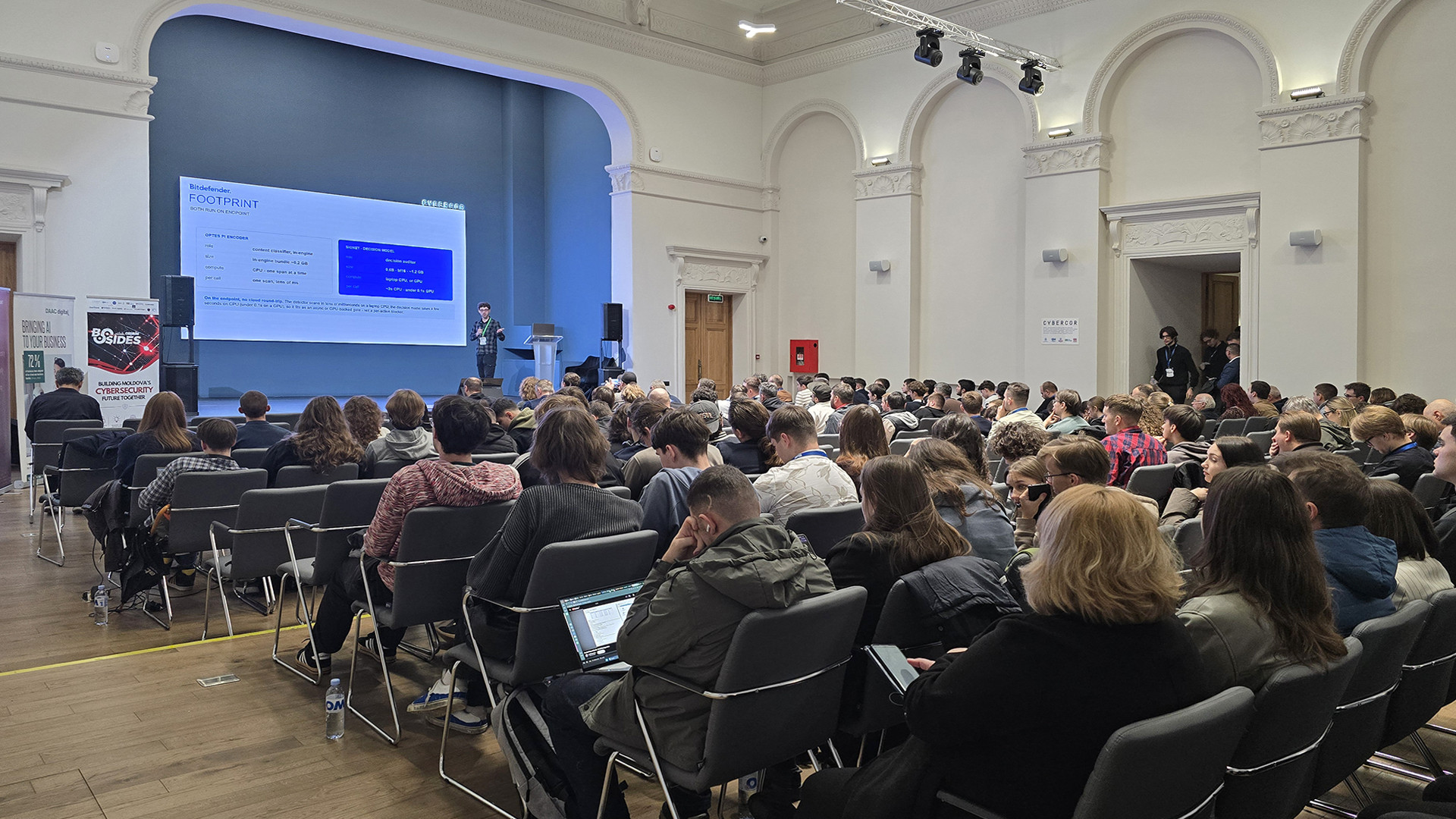
This topic was also widely discussed at the BSides Chișinău conference, which we support. The specialists’ conclusion is shared: AI accelerates not only defense but also attack. Attackers are already using these tools, so security cannot be postponed.
Pavel Zingan: The public sector is adopting AI more cautiously than business. Is that right?
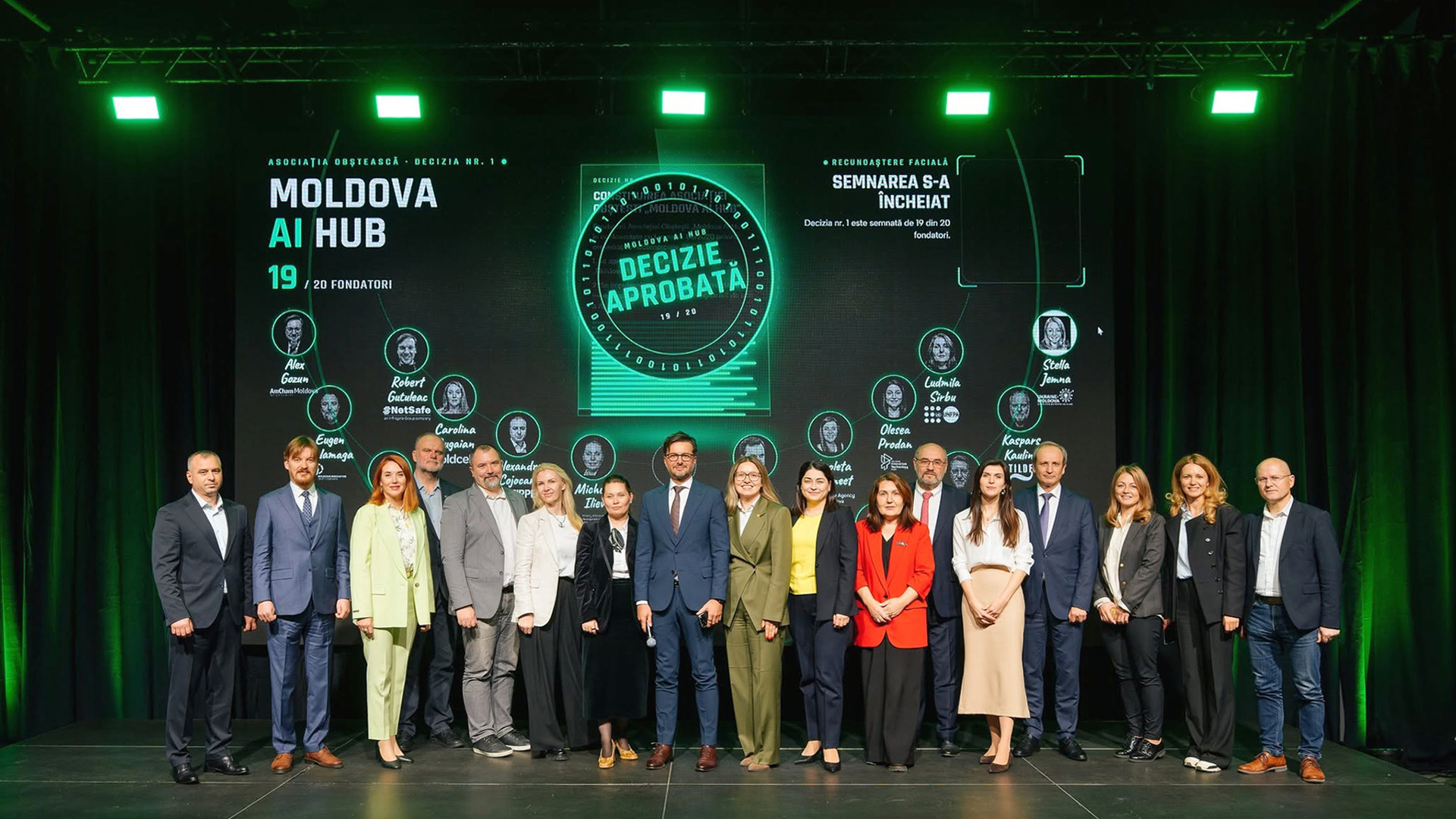
Alexandru Savinov: The caution is understandable: the state works with the data of all citizens, and the cost of a mistake there is higher. But excessive caution also has a price, because AI can greatly help with citizens’ requests, document management and analytics. For the public sector, the key issues here are data sovereignty, transparency of decisions and accountability for them. No single company or single agency can solve these issues alone. That is why DAAC digital became one of the founders of Moldova AI Hub, a platform where the state, business and the academic community work together. It is important to us that rules, standards and competencies in the country develop in a coordinated way.
Pavel Zingan: Where would you advise an executive who has decided to implement AI to start?
Alexandru Savinov: With tasks and responsibility, not with the choice of technology. First, understand which processes take the most time and money, what state the data for them is in, and who in the organization is responsible for a measurable result. Then choose one significant task and take it all the way to production, with integration, monitoring and protection. A successful internal example convinces employees and management better than any presentation, and you can expand from there.
Pavel Zingan: To conclude: DAAC digital has been on the market for more than thirty years. How do you see the company’s role in this new wave?
Alexandru Savinov: As a continuation of what we have always done. More than twenty years ago, our company brought the concept of the System Integrator to Moldova. Back then it was new: organizations needed a partner that would bring hardware, software and processes together into one working system and take responsibility for the result. One of the companies in our group still bears this name, DAAC System Integrator.
Today we are introducing a new concept, the AI Integrator. The essence is the same, but the task is more complex: to connect AI models with the organization’s data, processes, infrastructure and security so that they deliver a real result that pays off. Once, being able to work on a computer became mandatory for every employee. In the same way, mature use of AI will become mandatory for every organization. Our task is to help businesses and the state go down this path quickly and safely.
Pavel Zingan
Source: pavelzingan.md